Live
IDP Website Overhaul
Product
A global education platform connecting students with study opportunities across 34 regional sites.
Design Team
1 Experience Design Lead
1 UX/UI Designer (me)
Role
ideation, user flows, Wireframes, hi-fi prototyping, user testing, design system, cross functional collaboration, Implementation Reviews
Timeline
2023 - 2024
+
MVP pages
redesigned
+
Components
consolidated
+
Enquiry conversion
Q1 2024 vs. Q1 2023
+
Account sign-ups
Q1 2024 vs. Q1 2023
Project Overview
A year-long transformation of IDP’s global website across 34 regional sites, creating a more user-centred and scalable digital platform.
Challenge
Years of organic growth had created a fragmented experience shaped more by internal and regional structures than by the student journey. Navigation, page structures and UI patterns varied across markets, making key journeys harder to follow and the platform increasingly difficult to evolve consistently.
Business Goal
Build a scalable global platform that could better guide students from discovery to enquiry, improve conversion and support IDP’s continued growth across international markets.
My Role
Worked alongside the Experience Design Lead to deliver the redesign end to end, from defining key journeys and flows through to detailed UI design and handoff. Partnered with product, engineering, content and regional stakeholders to translate complex requirements into reusable patterns and help ship an MVP of 40+ core pages within the project timeline.
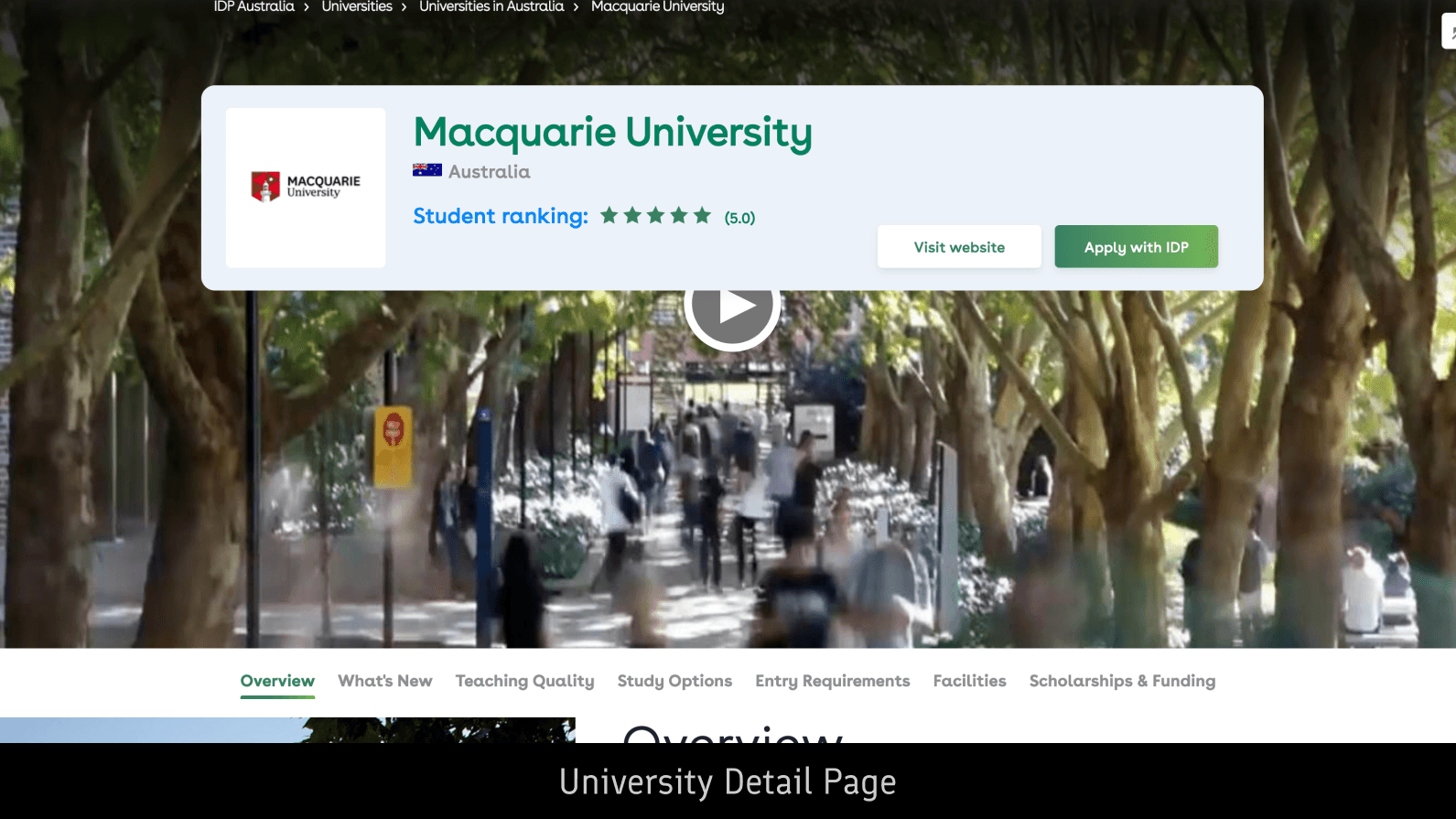
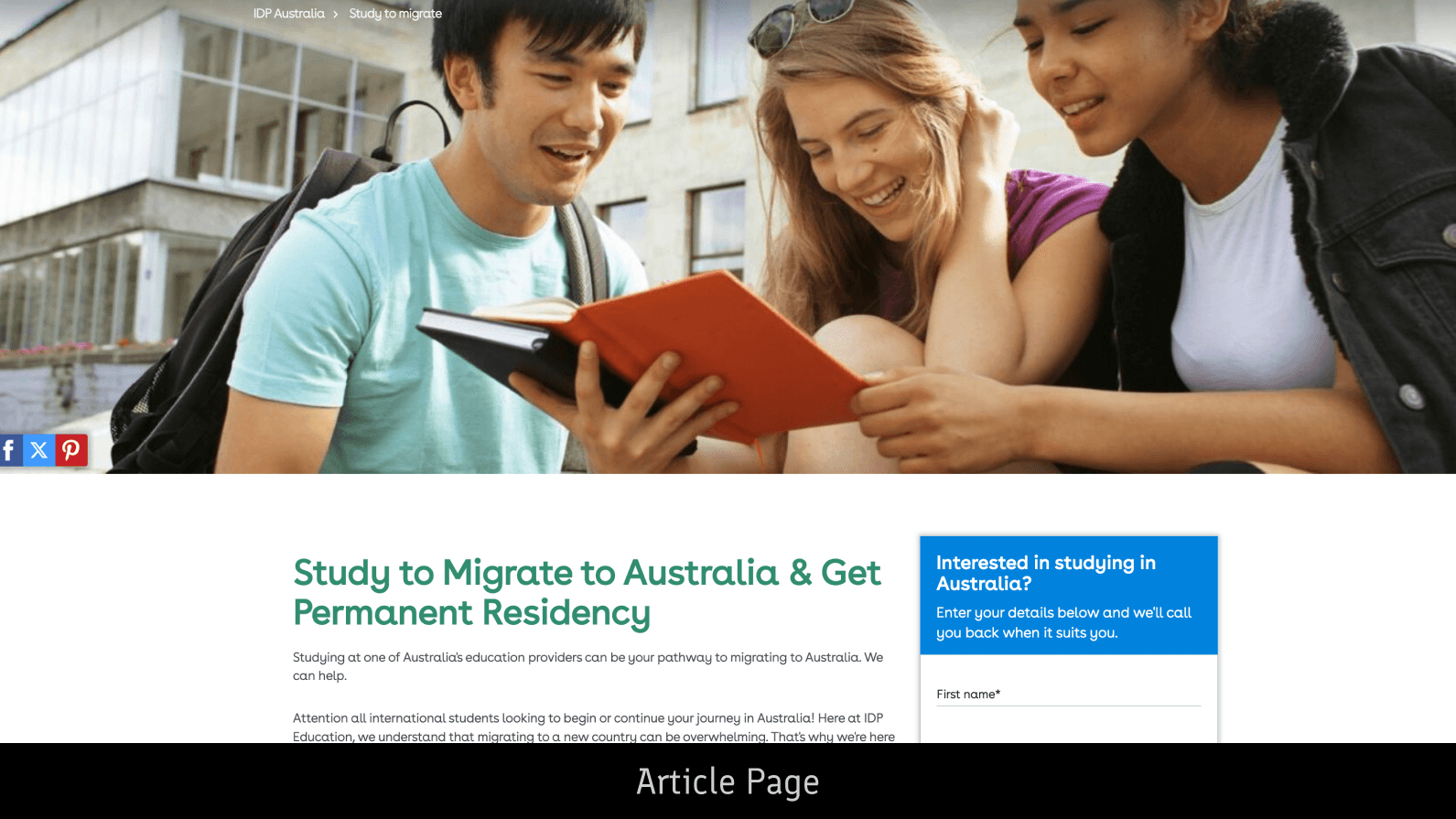
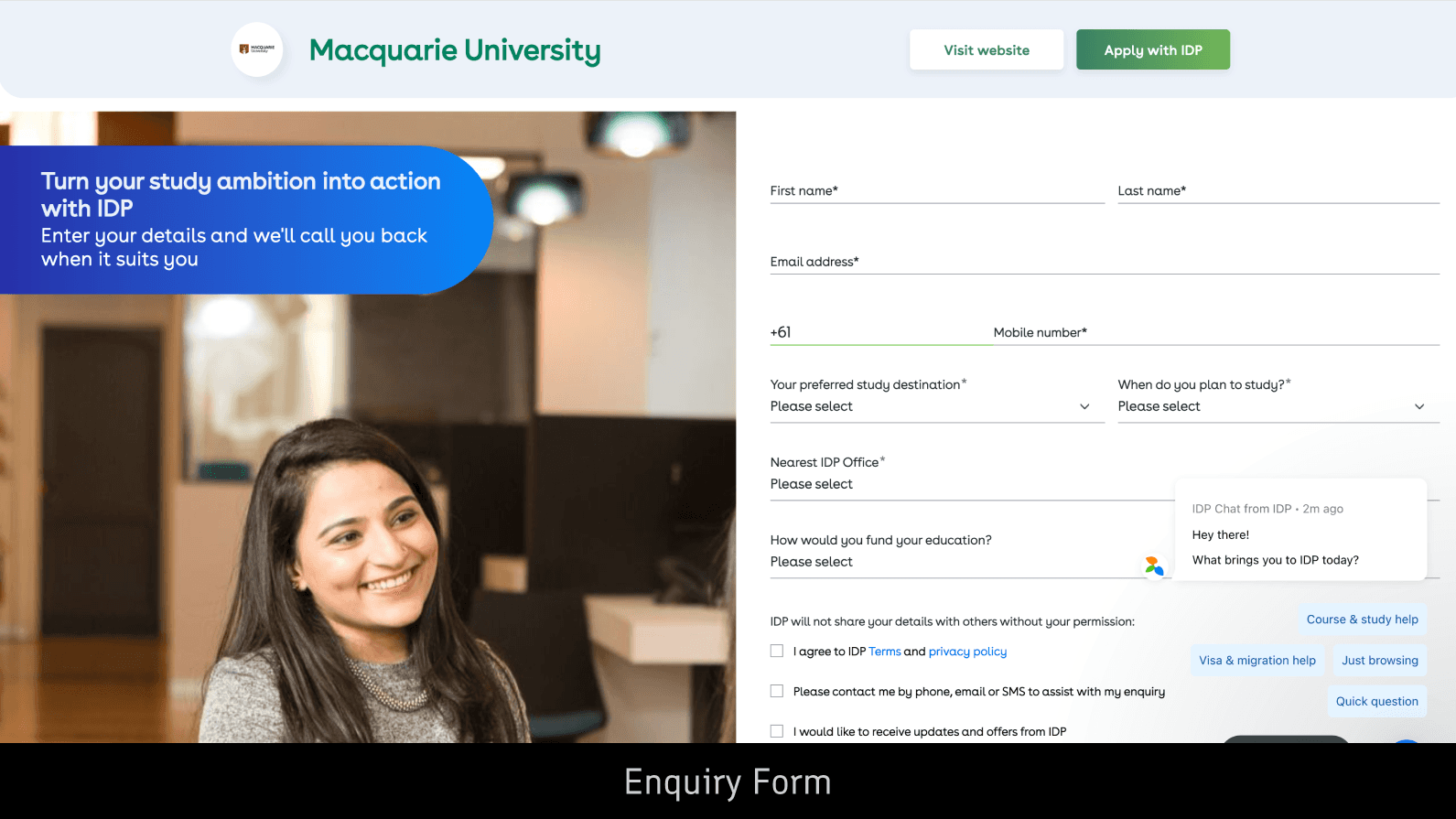
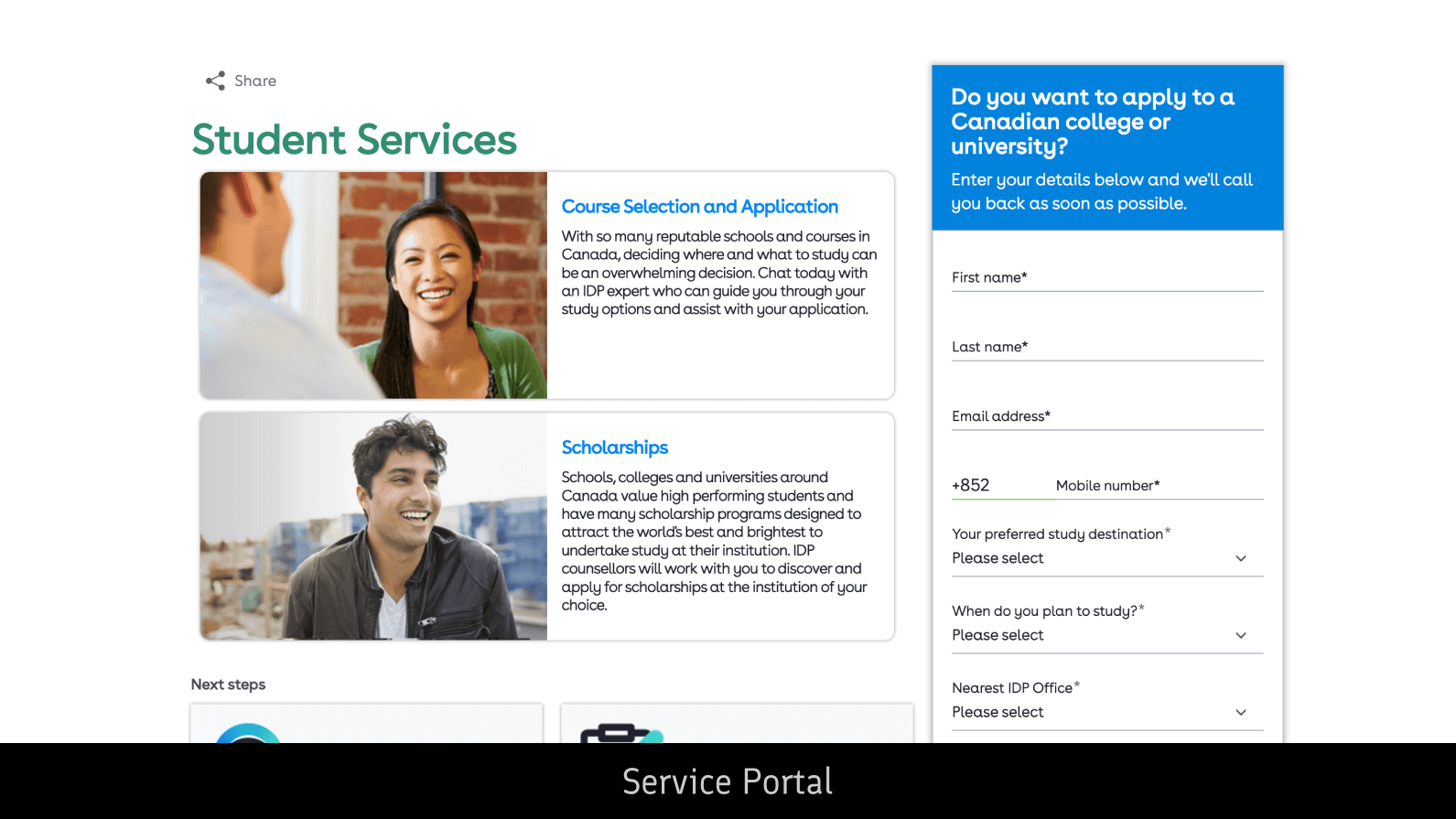
The Legacy experience
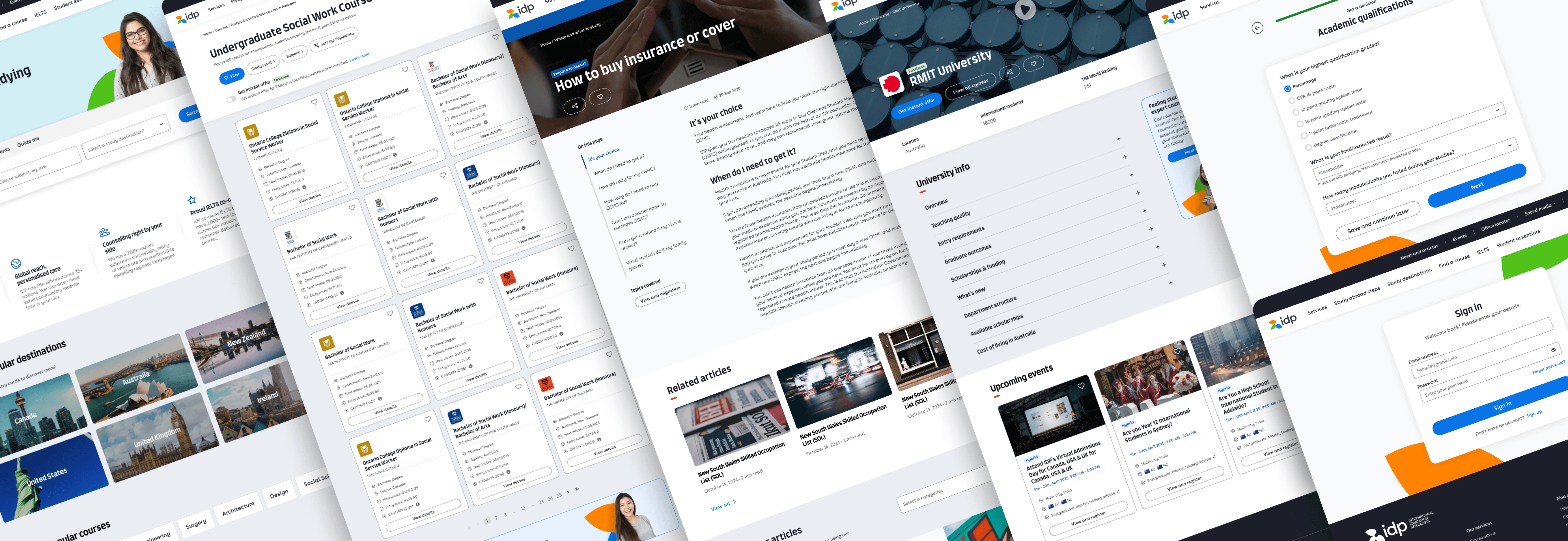
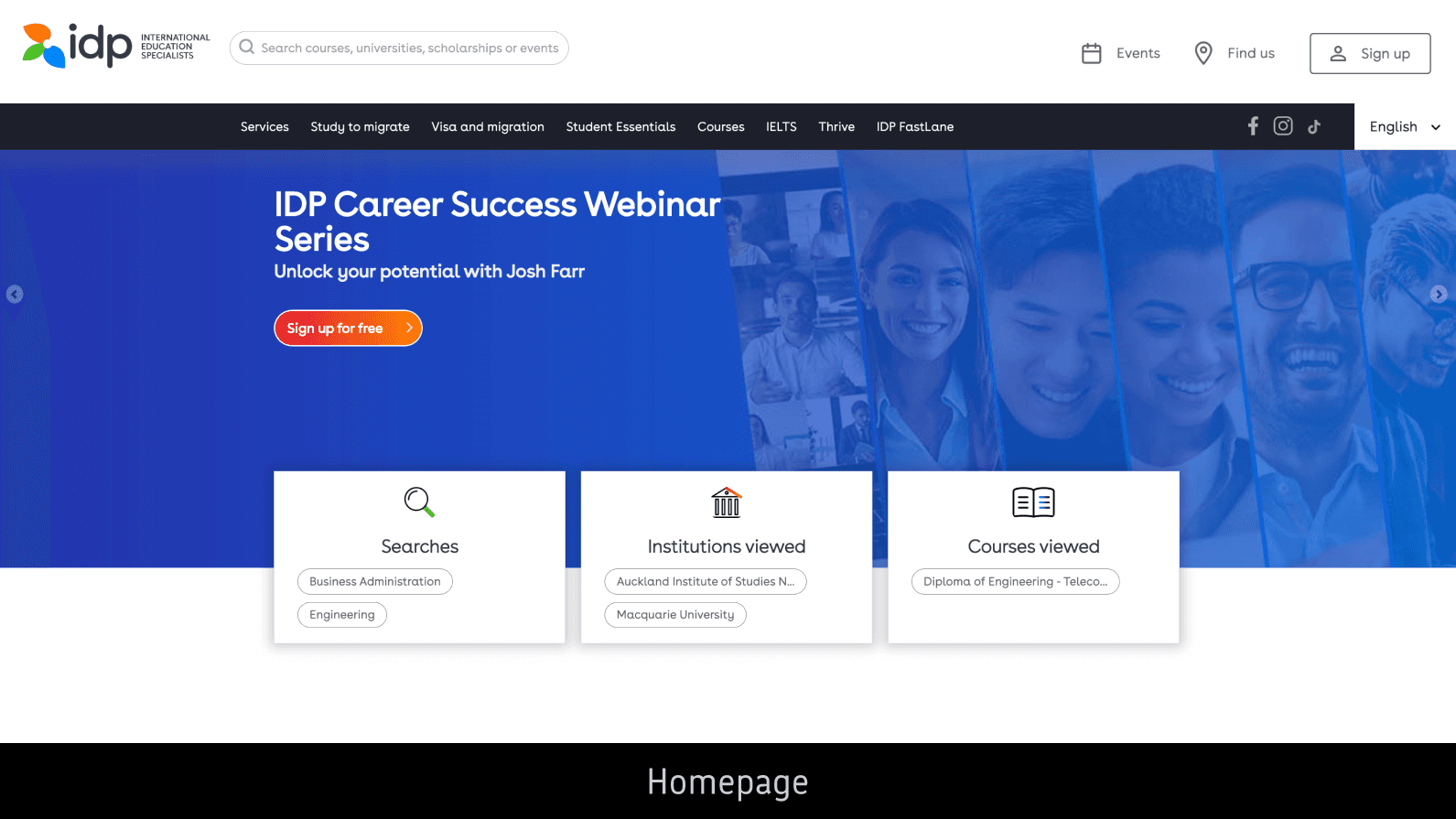
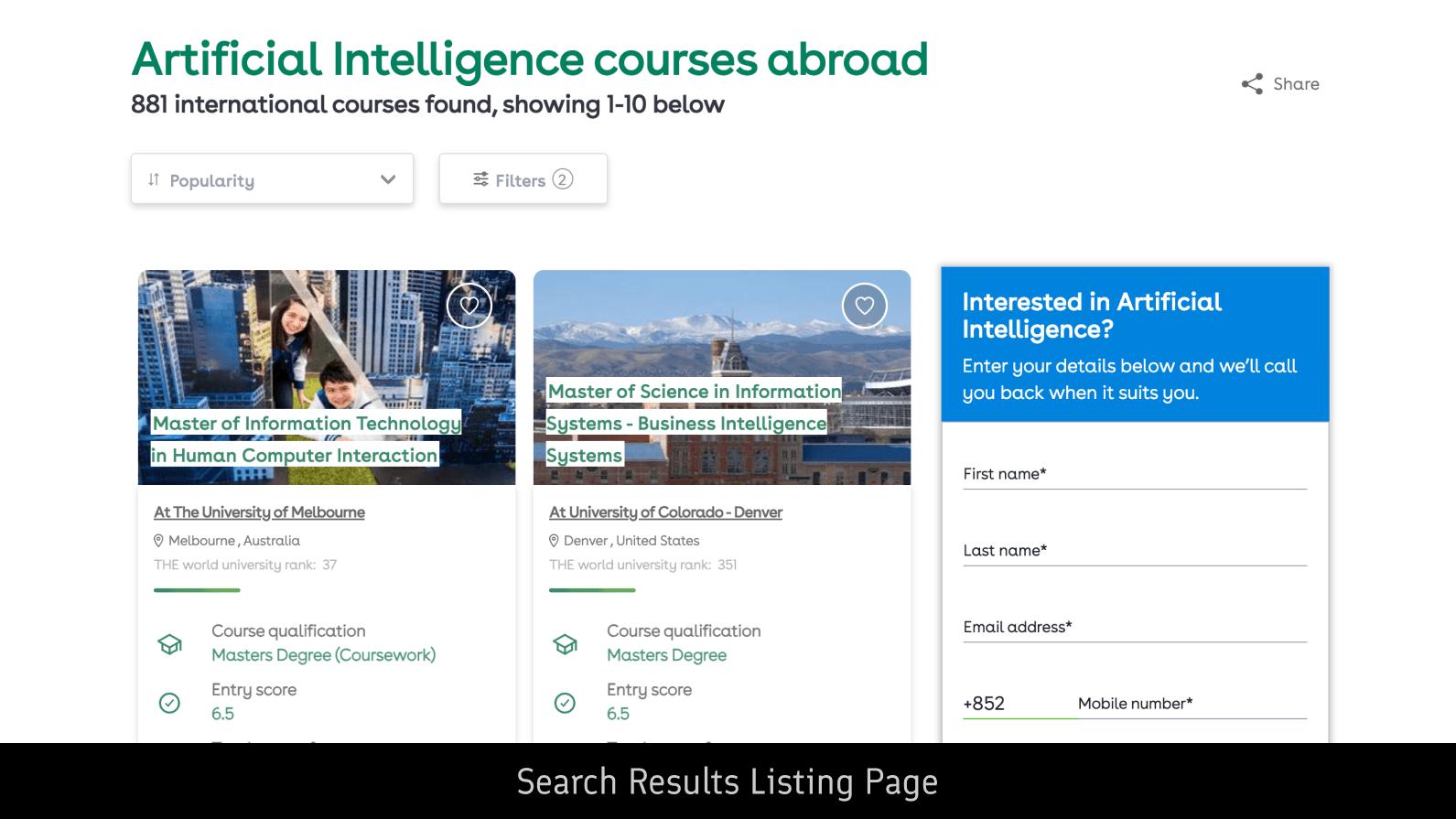
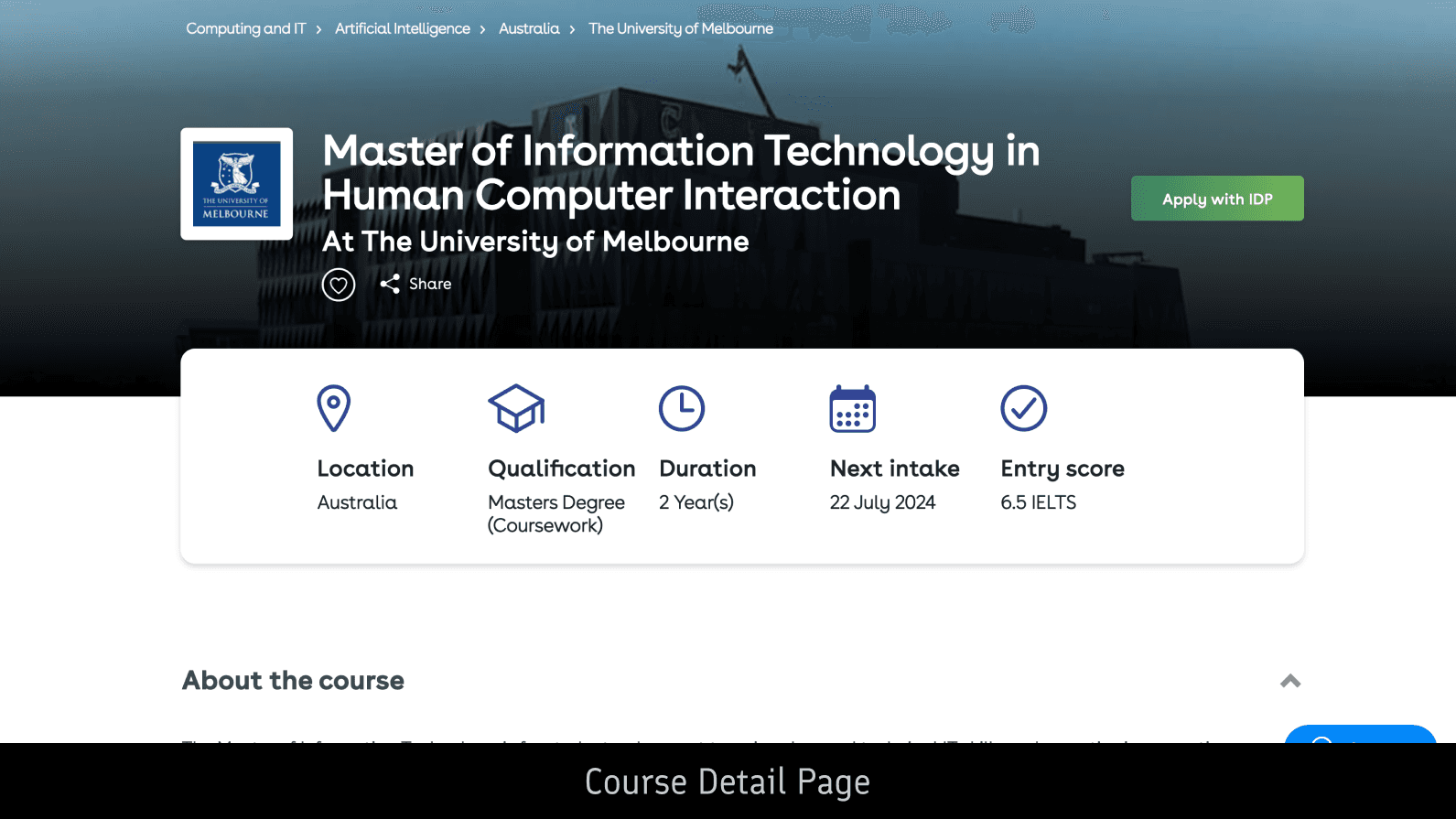
This is how that fragmentation showed up across the legacy experience. Drag to explore snapshots of IDP.com before the redesign.
Defining the Opportunity
I joined stakeholder workshops to understand the business goals, content priorities and key drop-off points across the existing experience. In parallel, the CX research team had developed personas and journey maps that highlighted where students and parents were experiencing friction. Together, these inputs revealed four core problems that shaped the redesign:
#4
Regional needs had outgrown the existing system
Markets had adapted pages and patterns to local needs over time, making global updates harder to manage consistently.
#3
There was little reason to sign in
The platform did not communicate why creating an account was worth the effort, so most users never did.
#2
Conversion was pushed too early
Overwhelming enquiry forms placed prominently across pages introduced friction too early; multiple CTAs further diluted key actions.
#1
Navigation was difficult to follow
Information hierarchy and navigation were unintuitive. Users struggled to find relevant content and understand their next step.
Shaping the New Experience
1) IA and user flow
I contributed to restructuring the navigation around how students explored their study options, then mapped key journeys from discovery through shortlisting and enquiry to test how the new structure worked end to end.
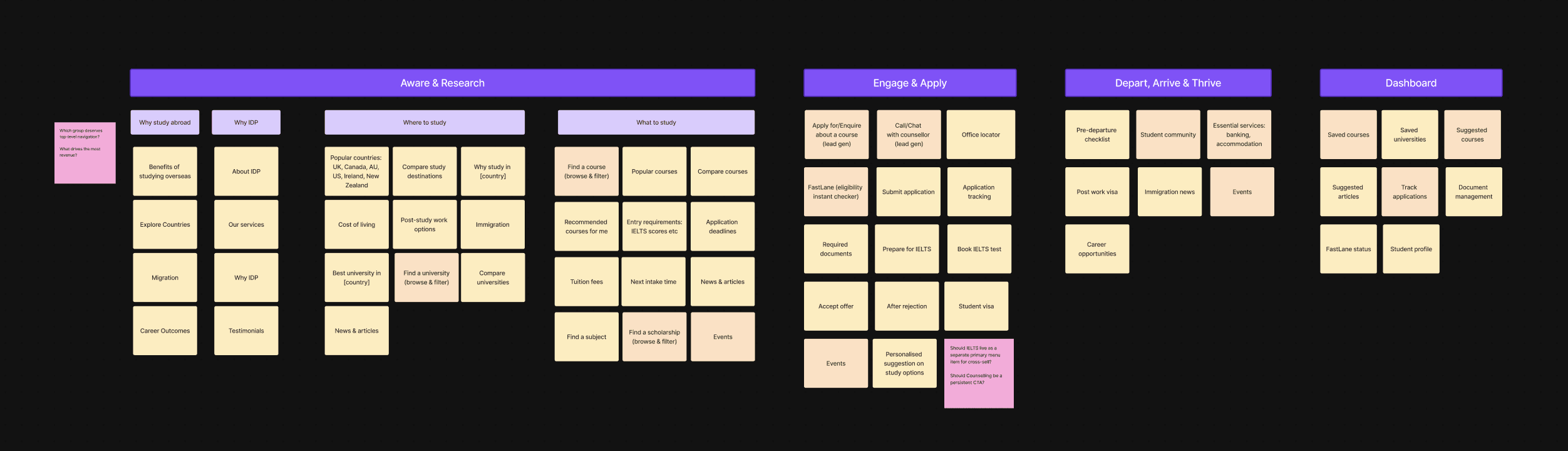
New IA
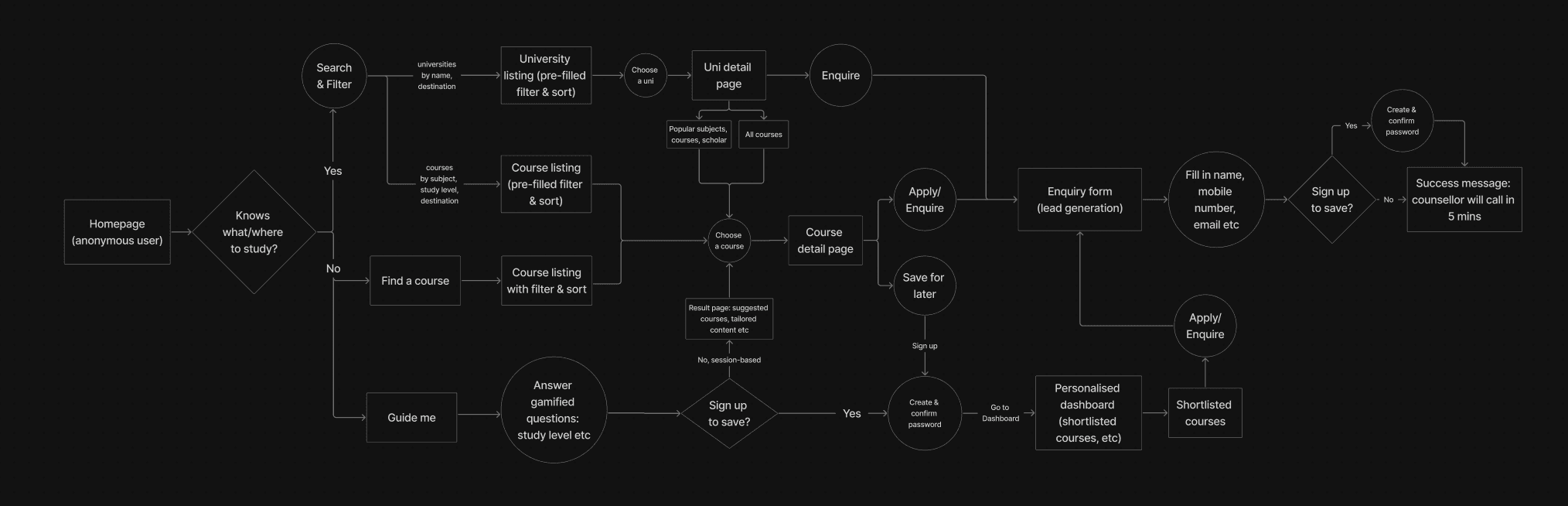
User flow
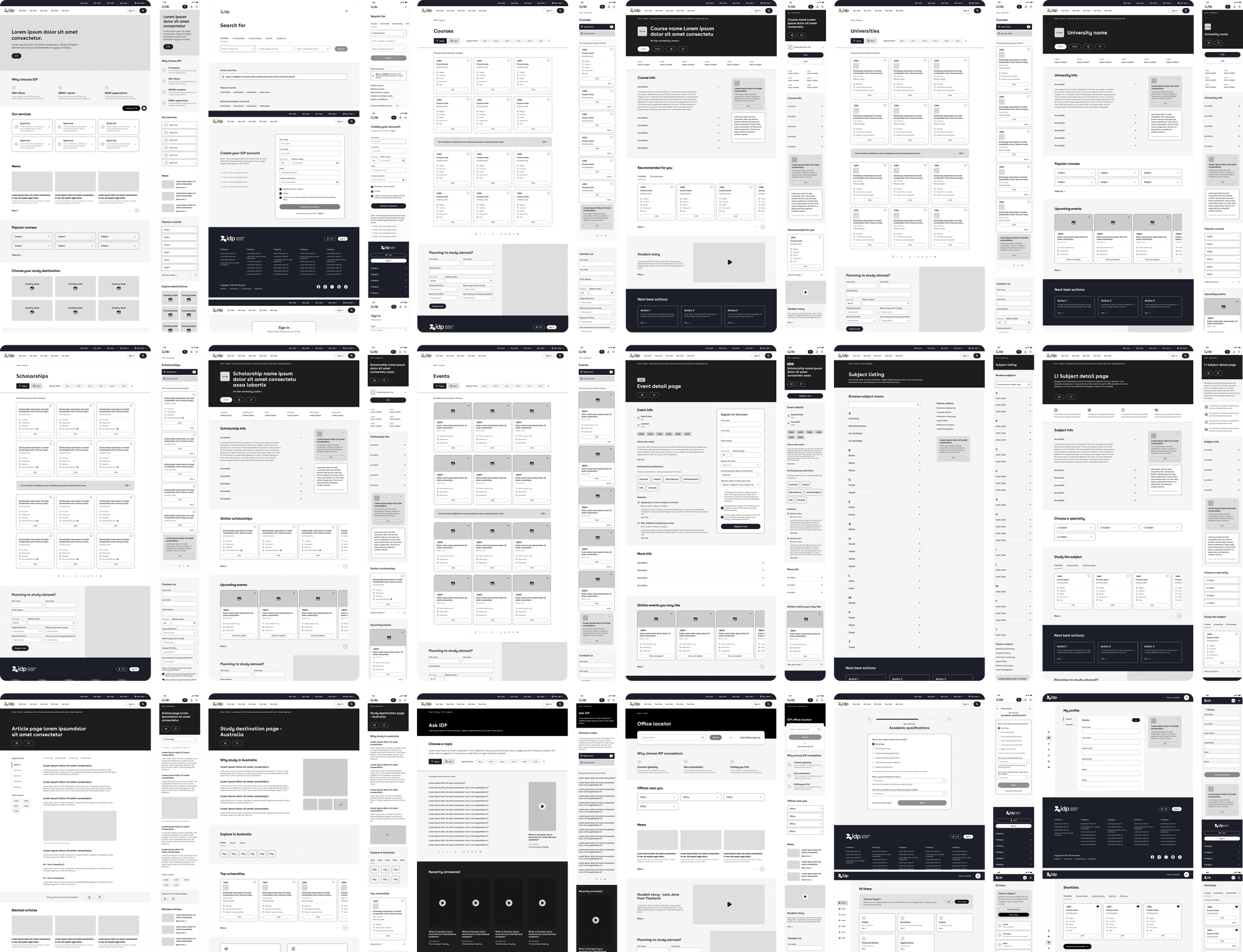
2) Page composition and team alignment
I translated requirements across 40+ MVP pages into reusable page structures and modular layouts. The wireframes evolved through reviews with Content, SEO, Product, Business Analysis and Engineering before moving into detailed design.
Key Design Solutions
The redesign focused on three key moves: making discovery easier, guiding students through the study journey, and creating more value for returning users.
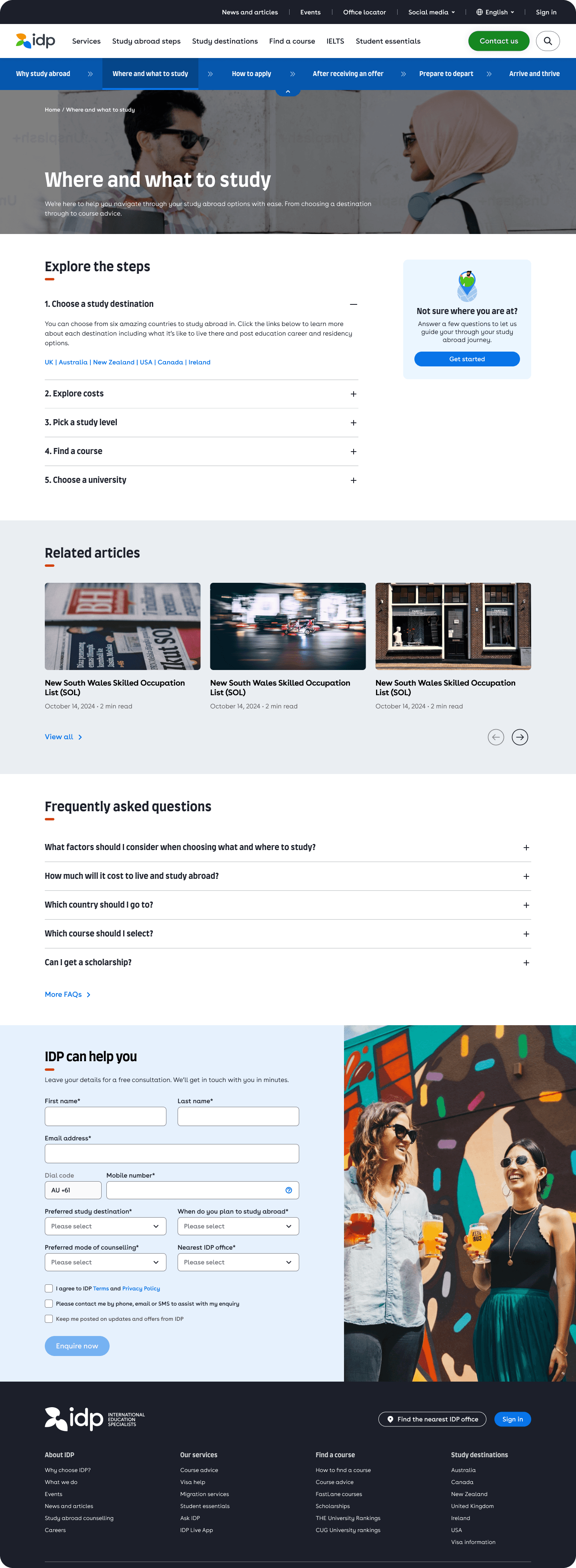
#1 Making discovery easier (Homepage, Listing Page, Detail Page)
Helped students quickly find and evaluate the right courses and universities with clearer navigation, consistent page structures and more focused information.
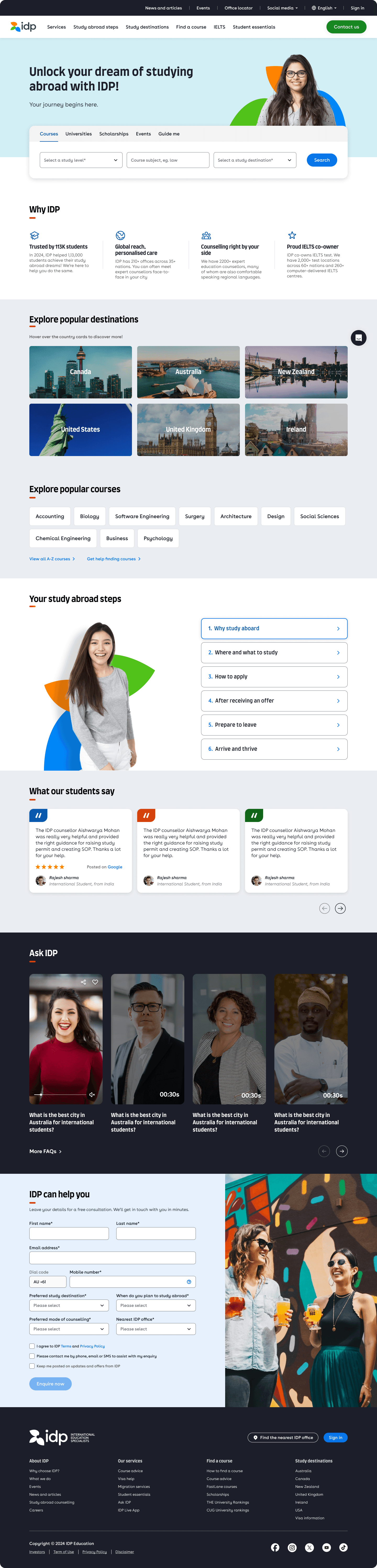

Start with search
Moved search into the hero so students could begin exploring immediately.
Reduce pressure to enquire
Moved enquiry out of the main flow while keeping 'contact us' easy to access.
Build trust early
Moved search into the hero so students could begin exploring immediately.
Unify listing patterns
Created a shared structure across listing types so the experience stayed familiar.
Surface key filters
Brought frequently used refinements into quick-access filters.
Prioritise key details
Prioritised the information students compare most when evaluating options.
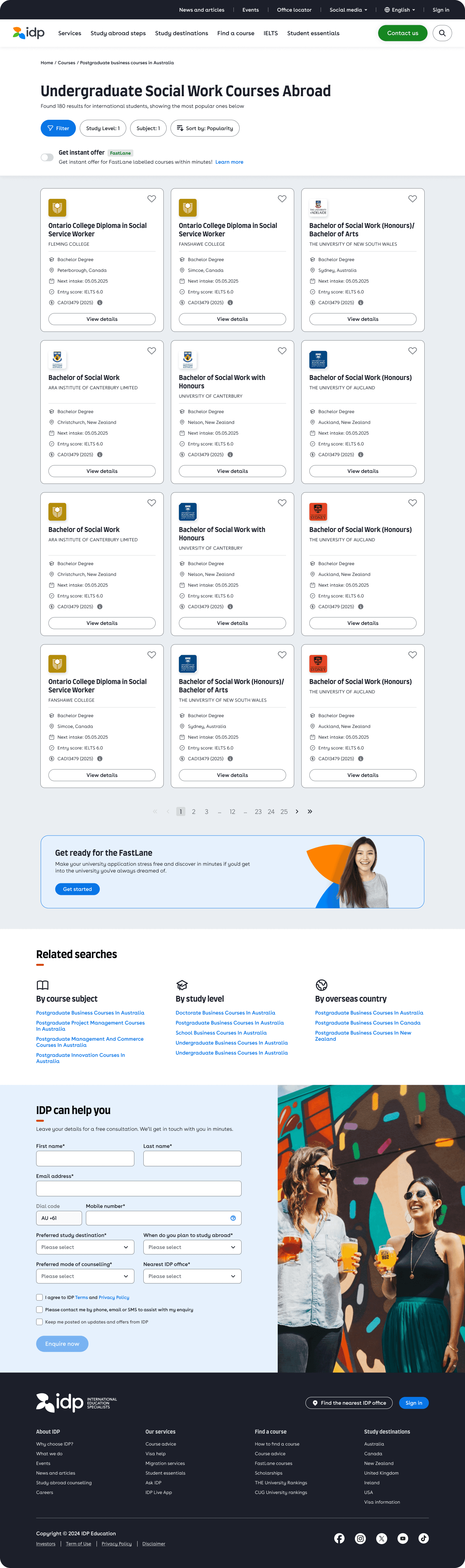

Surface key facts
Surfaced the most important decision-making information upfront.
Clarify CTA hierarchy
Reduced competing CTAs and gave the primary action stronger priority.
Guide the next step
Used contextual guidance to help students understand what to do next.
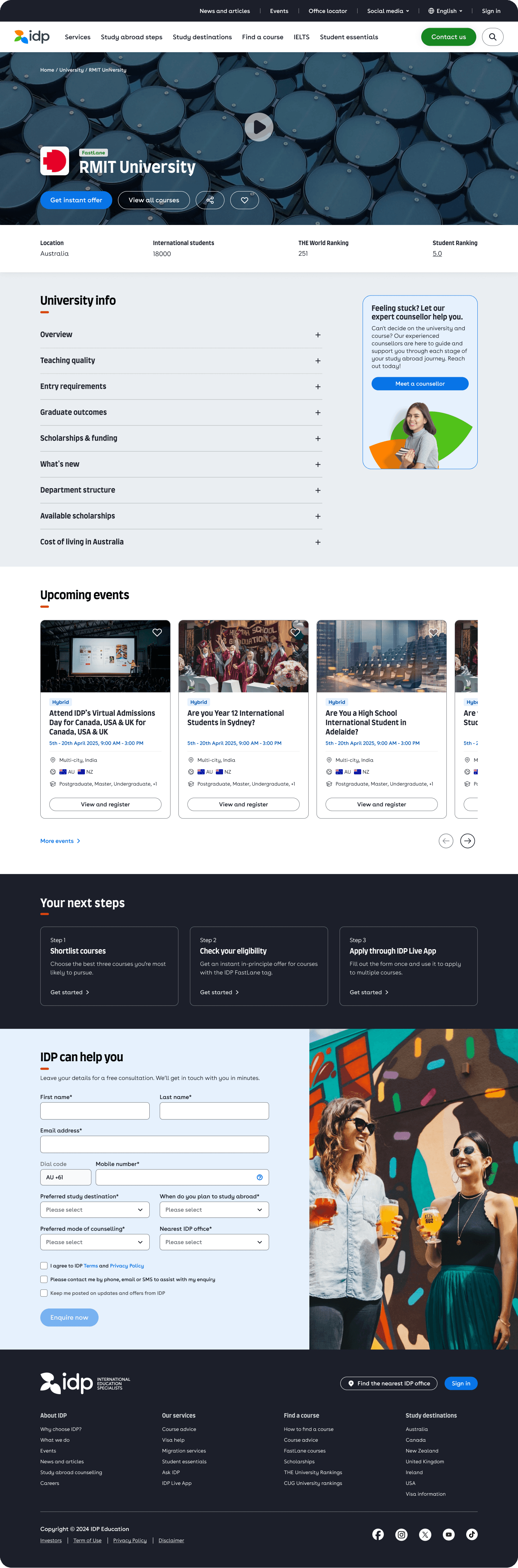

#2 Guiding the study abroad journey (Article/Info Page)
Introduced a clear, structured journey to help students understand where they are and what to do next, with relevant content, tools and guidance at each stage.
Visualise the journey
Introduced a six-stage framework so students could understand where they were and what came next.
Connect the journey
Surfaced the framework from the homepage and relevant content pages so users could enter the journey from multiple points.
Guide each stage
Created dedicated stage pages combining tasks, tools and relevant content for each phase of the journey.

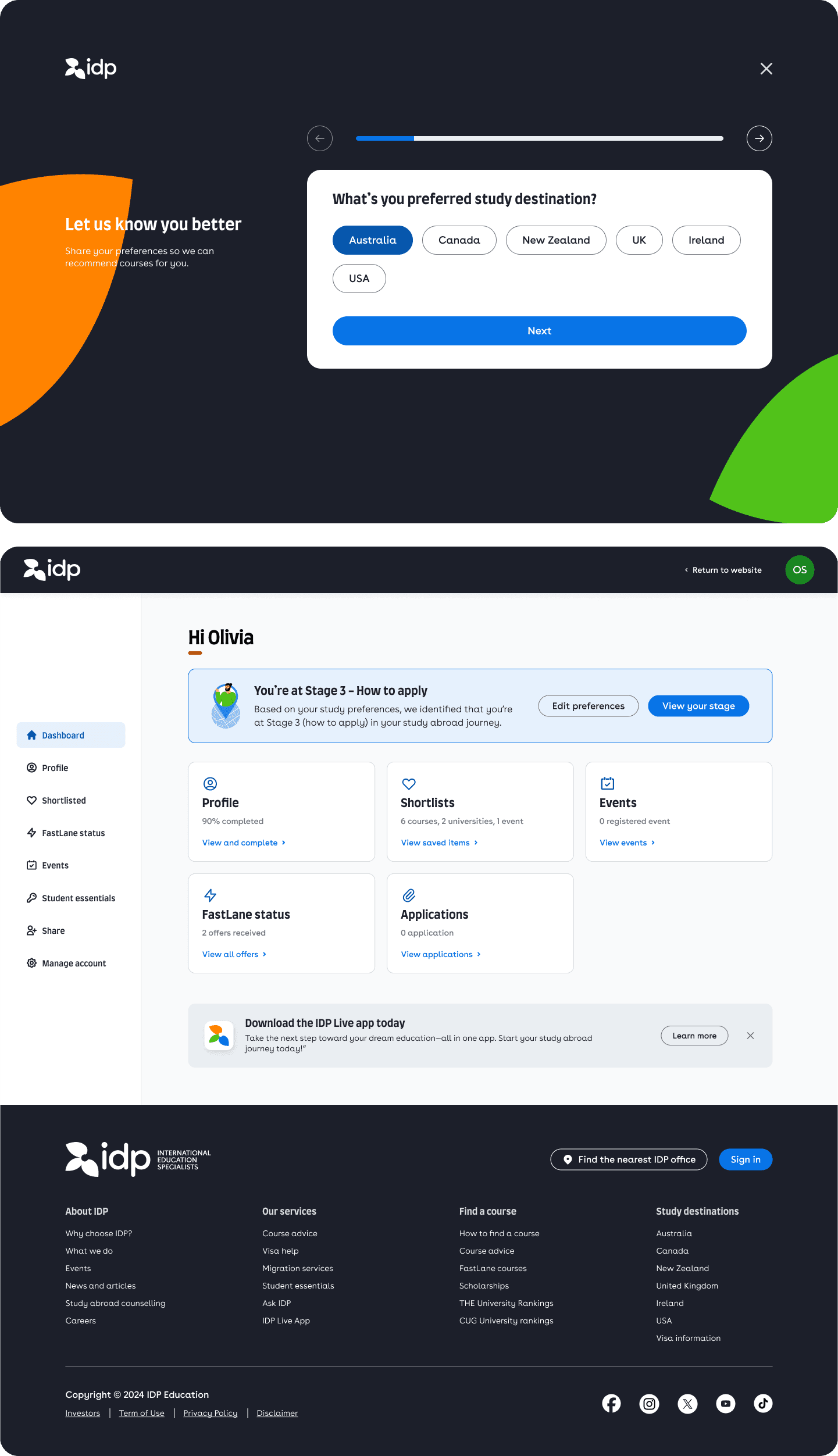
#3 Giving users a reason to return (Onboarding + User Dashboard)
Designed personalised experiences that show value early, encouraging more students to sign in and return to continue their journey.
Personalise quickly
A short preference quiz identified study interests and journey stage without requiring account creation upfront.
Support returning users
The dashboard consolidated profile, shortlists, events and linked services into one place.
Show value first
Users could see tailored results first, making the benefit of creating an account clearer.

Visual Language & Design System
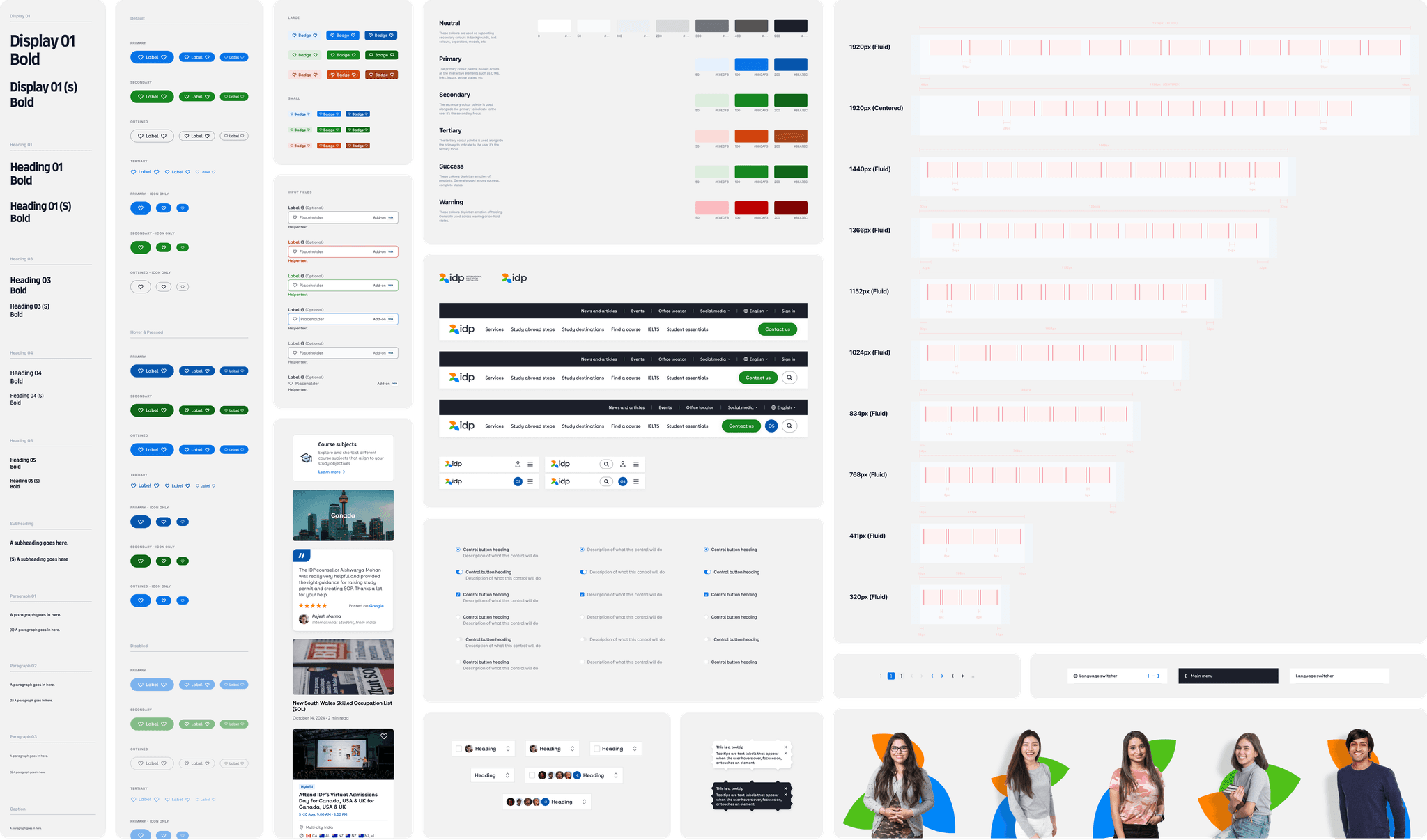
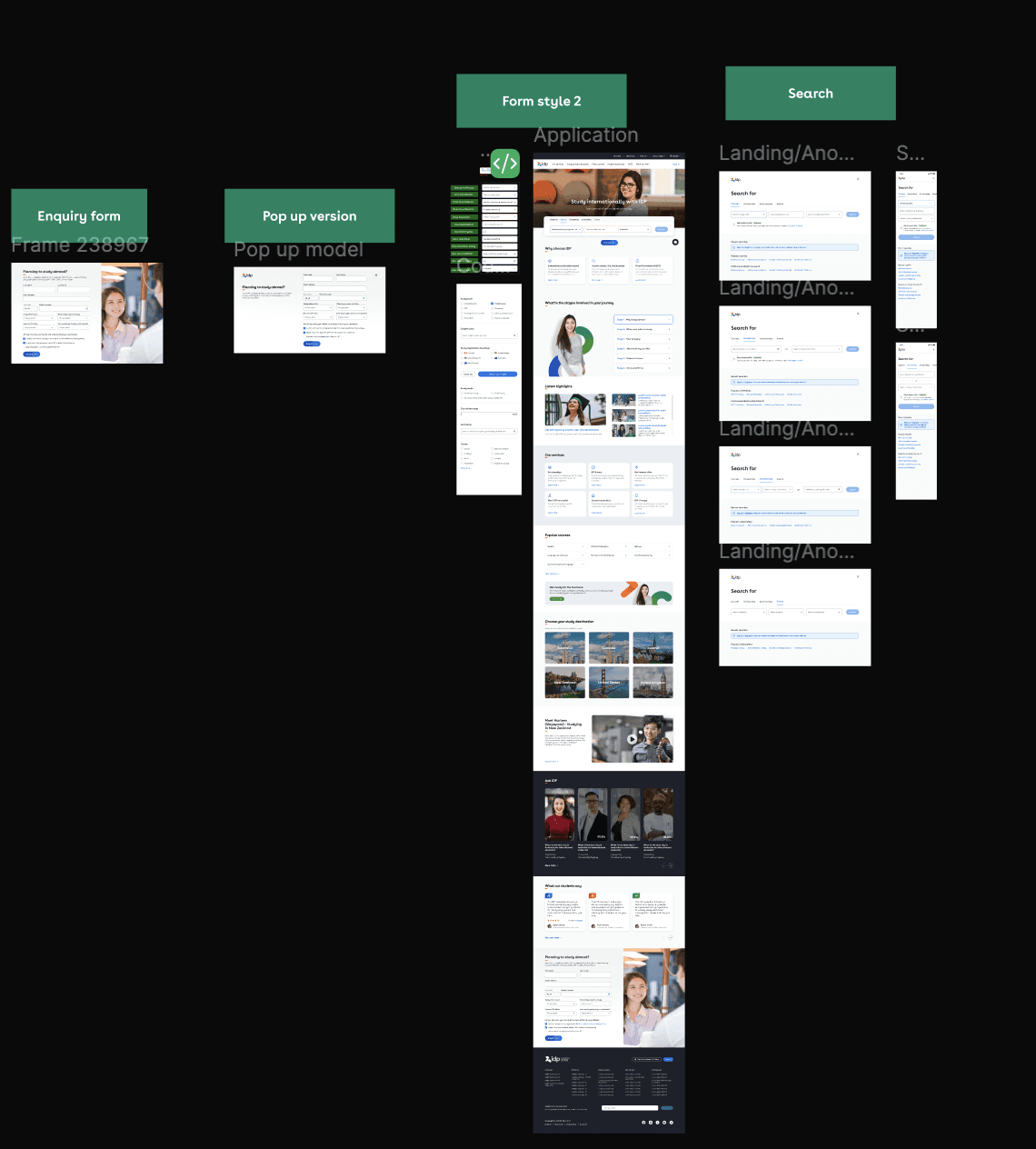
The new visual language and interaction patterns were carried into a broader system update. I helped refine and organise more than 300 components into a reusable library, creating a stronger foundation for consistent rollout across regional sites and future product development.
Implementation & Rollout
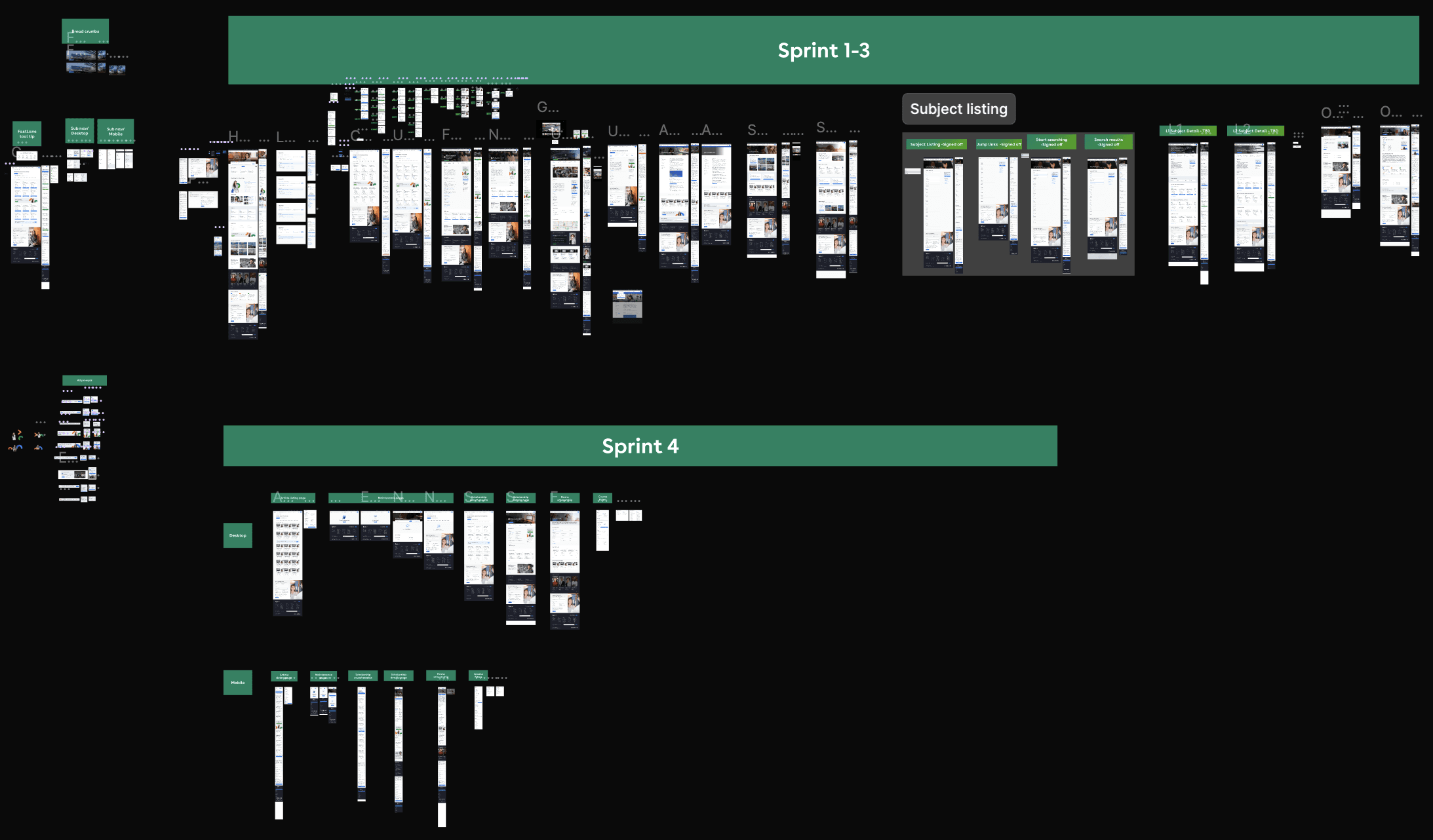
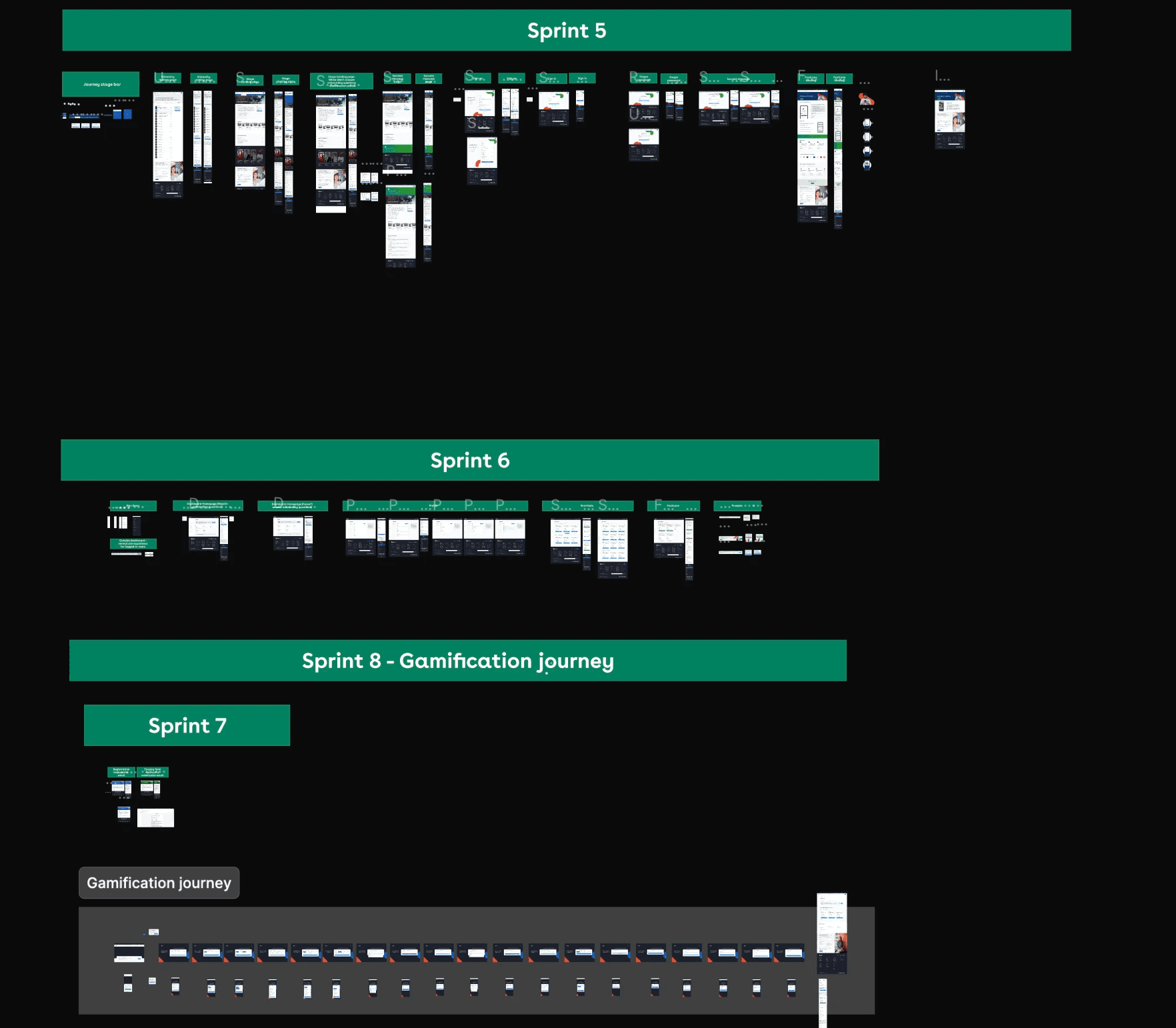
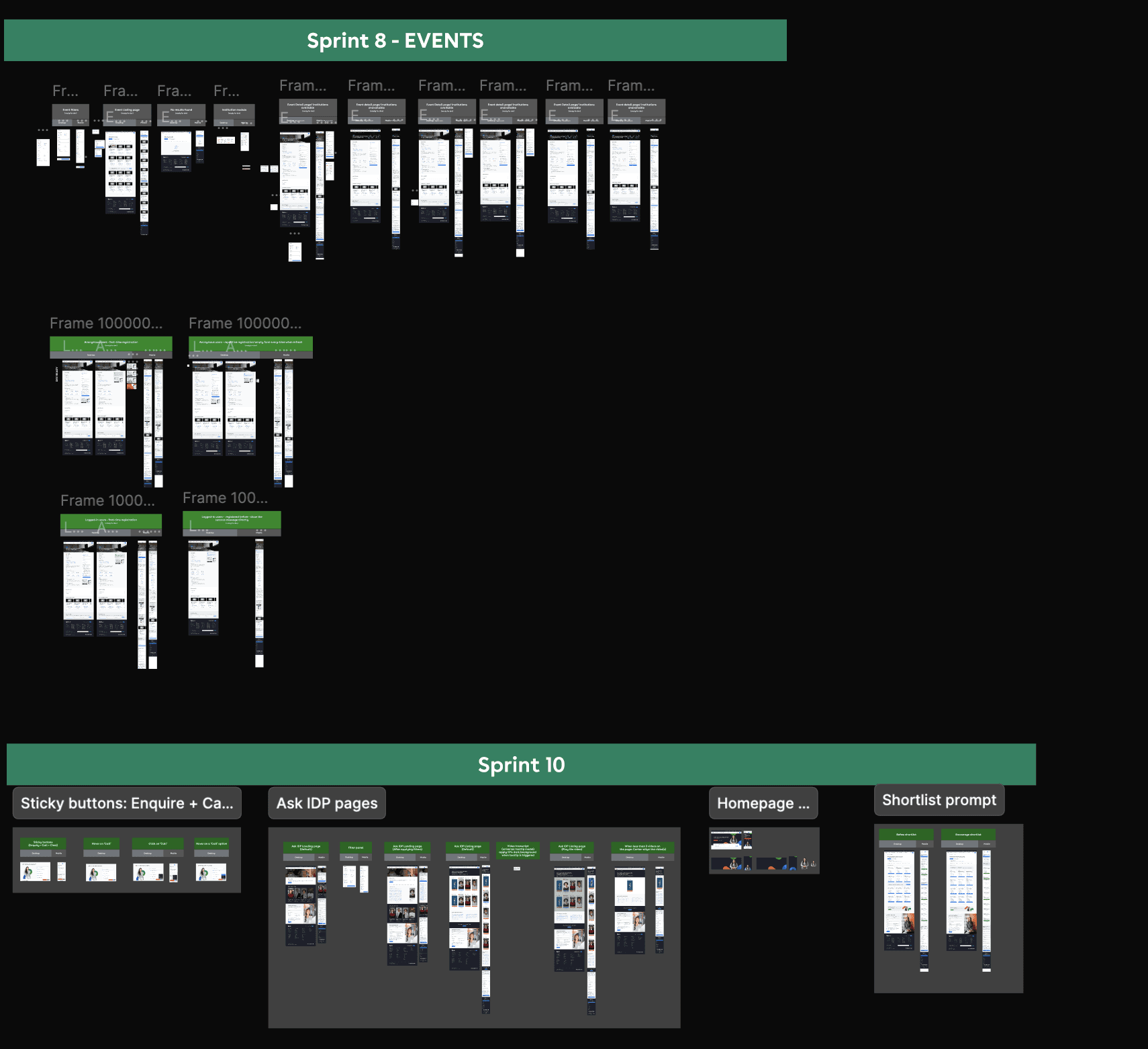
Across 12+ delivery sprints, I worked closely with engineering through design walkthroughs, implementation reviews and iterative QA. I documented key behaviours, resolved edge cases and supported the team as designs moved from Figma into production.
The redesigned IDP.com launched in 2024, establishing the foundation for continued rollout and expansion across regional markets.
Impact on users and the business
The redesign created a clearer, more consistent experience across IDP’s global website while giving regional teams a stronger foundation to build on.
↘
+17% enquiry conversion. Clearer journeys and more focused CTAs helped reduce friction across key pages.
↘
+23% account sign-ups. Improved sign-in touchpoints and a more useful signed-in experience increased account adoption.
↘
300+ components consolidated. A more unified design system reduced duplication and supported more consistent regional rollouts.
↘
40+ MVP pages delivered. The new experience established a scalable foundation for future expansion across markets.
↘
Established a stronger foundation for ongoing product growth, enabling regional teams to launch new pages and features faster after rollout.
Looking back
Working through disagreement. Marketing wanted the enquiry form upfront to protect conversion. I pushed to move it out of the main flow and keep support accessible through a persistent “Contact us” action. Testing showed the new approach reduced friction without hurting conversion.
A call I defended. For the dashboard, I argued against reusing the full global navigation. A dedicated side nav kept the signed-in experience focused while still providing a clear route back to the main site.
How I approach components now. This project changed how I think about components. I now design for multiple contexts from the start, rather than solving for a single page or use case.
Scope I'd revisit. The stage pages shipped as useful guides, but they were still mostly informational. I’d make the next version more diagnostic, helping students identify what they need and surfacing the right tools sooner.


1) Make discovery the starting point
Moved search into the hero so students could begin exploring immediately.